


Enterprise Data Governance and RPA Modernization for DCMA
The Problem
DCMA identified a need to better use data and emerging technologies at the enterprise level as part of standing up a new headquarters Chief Digital and Artificial Intelligence Office (CDAO).
DCMA relied an outdated legacy data approach in a world rapidly evolving with speed-of-mission needs and AI utilization requirements. A highly centralized data approach was slow to respond to mission and field needs, resulting in a large body of data and citizen-developed tools that were not in the field of view for IT. DCMA needed a cohesive strategic approach, including governance, data management, tool stack development and optimization, and an approach to managing data across the enterprise.
The organization faced several challenges:
- Most data use happened in citizen-developed apps without active management or centralized governance.
- New focus on AI and emerging technologies demanded a new approach to include AI-specific governance and data testing approaches.
- Concern about aggregating data increased the required security.
- The need to develop new AI data tools and data analytic approaches required a more flexible and responsive data infrastructure.
The Approach
To meet these needs, OTOT provided AI governance and data management. We deliver the following capabilities:
-

Data Discovery
OTOT performed a comprehensive data source and collection review across the agency and its DOD partners. We designed a common data map/master architecture of all data within the agency and across its departments, including data provenance, need, and usage.
-
Data Governance Methodology
OTOT provided critical input and developed approaches for data governance and the new CDAO, including organization and staffing needs, and new standards and policies. Our team conducted thorough analysis of industry and government standards to make program decisions. We provided recommendations for leadership based on our review of standards, policy requirements, and industry best practices.
-
Data Management Framework
OTOT created new processes and designed a more flexible data infrastructure to manage data and data flows. We developed a meta data model describing the data points including priority and significance, statutory and regulatory requirements, and mission critical functions that the data support.
-
RPA for Data Analytics
OTOT used agentic RPA automation to provide optimized data flows for analytic tools across the enterprise, while bringing to bear new AI based data management tools. We authored the Chief Data Officer’s strategy for the entire data program; this includes how RPA fits into the strategy and the roadmap to bring RPA into the organization as part of a broader data strategy.


The Outcomes
OTOT’s data governance definitions and management practices produced the following results:
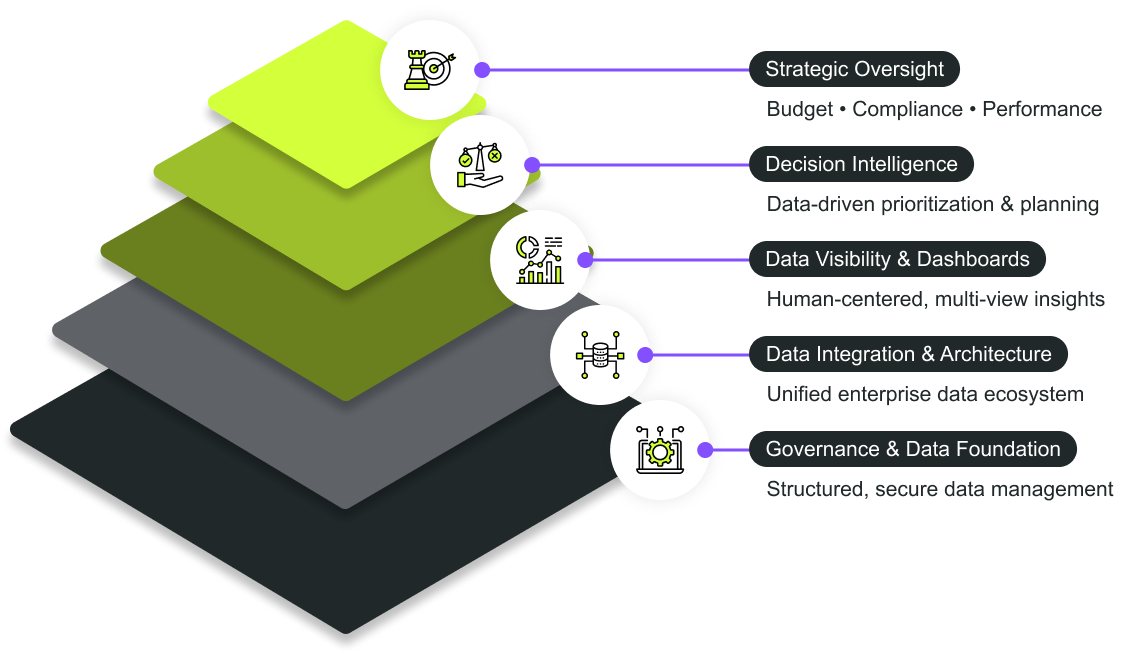
- Develop dashboards based on human-centered design (HCD), providing multiple views for the preferred methods to accomplish short-term and long-term objectives. The front office (Commanding Officer) uses these dashbaords for agency-wide management and monitoring, as well as executive briefing to JCS. OTOT’s work won our customer a unit citation and medal.
- Consolidate data across multiple departments and functions, and provide detailed views into the production and delivery aspects of the acquisition lifecycle.
- Deliver an overview of the DCMA CDO data landscape and provide insights into the IT ecosystem, allowing leaders to assess investments and priorities. Key areas include IT infrastructure, cloud migration, data analytics, and contract administration customer experience.
- To assess the health and security of the federal IT portfolio, give the CIO and CDO the tools to track budget allocation (budgets across agencies and IT projects), compliance status (status on compliance with federal IT policies, regulations, and cybersecurity standards), and project performance (performance metrics on milestones, timelines, and resource utilization).
- Design and implement an AI-enabled central data repository for agency data and the AI-generated information related to that data. Create an AI delayed delivery model to predict which vendor deliveries need enhanced surveillance and risk mitigation, and prototype other fraud and delivery models to prove the data repo.
Browse more case studies to see how our customers turn vision into reality.

NAVSEA Automation
Automation for mission-critical system integration testing
OTOT demonstrates massive acceleration and return-on-investment for systems that support mission-critical ship maintenance operations.
Military Health System
Using AI-augmented RPA to Accelerate Prescription Fulfillment
Military Health System (MHS) prescription processing depends on manual entry, delaying fulfillment and creating human errors that interfere with the military personnel tactical readiness.