


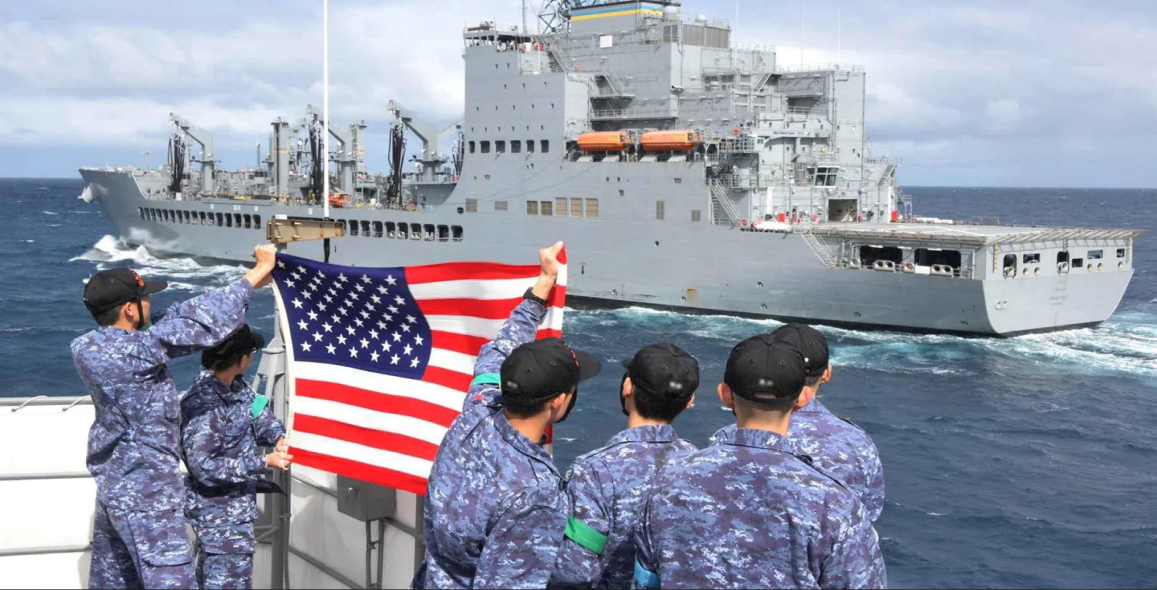
Scalable UiPath Automation for the US Coast Guard
The Problem
The US Coast Guard (USCG) required scalable, secure automation capabilities to reduce manual workload, eliminate process bottlenecks, and increase mission readiness by accelerating key finance, personnel, and operational data processes.
Across finance, personnel management, and operational reporting, USCG relied heavily on manual, document-intensive workflows that consumed thousands of hours annually and limited the speed and accuracy of mission-critical data. Legacy systems created repetitive data entry, backlogs, and inconsistent data quality across invoice processing, boarding reports, and officer evaluation reports (OERs).
To support Force Design 2028 and the ‘Advance Our Mission Excellence’ and ‘Transform Our Total Workforce’ strategic priorities, USCG needed a modern automation capability that seamlessly integrates with legacy environments and delivers measurable accuracy, speed, and workload reduction.
USCG faced several challenges in developing and implementing this platform:
- High-volume processes in finance, HR, and operations required repetitive manual data entry, creating delays and backlogs.
- Document-heavy workflows (invoices, boarding reports, OER forms) produced inconsistent data quality and audit challenges.
- Legacy systems such as Marine Information for Safety and Law Enforcement (MISLE), Direct Access (DA), and Interactive Personnel Electronic. Management System (iPERMS) lacked interoperability, slowing reporting and oversight.
- Personnel shortages and growing mission demands required reducing administrative burden to preserve readiness.
- The organization needed an enterprise automation platform that met federal Authority to Operate (ATO), security, and governance requirements while scaling across districts and mission areas.
The Approach
To meet these needs, OTOT provided robotic process automation (RPA) strategy, UiPath development support, and enterprise implementation guidance.
Our approach delivered a secure, scalable automation capability aligned with USCG mission priorities:
-

Document and Task-Centric Automation Deployment
OTOT used UiPath Document Understanding, Apps low-code development tool, and attended automations to digitize and streamline high-volume workflows such as invoices, boarding reports, and OER processing.
-
Human-in-the-Loop Compliance
We integrated human review steps through UiPath Action Center to ensure accuracy in finance and personnel workflows and maintain mission-critical oversight.
-
Legacy System Integration
We built automations that interface with MISLE, DA, iPERMS, and USCG financial systems, overcoming interoperability gaps without modifying core systems.
-
Strengthened Mission Readiness
OTOT accelerated the flow of accurate financial, personnel, and operational data to commanders and mission-support units.
-
Scalable Roadmap Toward Agentic Automation
OTOT positioned USCG to evolve from RPA-led to document-led and eventually agent-led automation, enabling multi-agent workflow orchestration through UiPath Maestro and future AI-based copilots.


The Outcomes
OTOT’s partnership with USCG produces the following results:
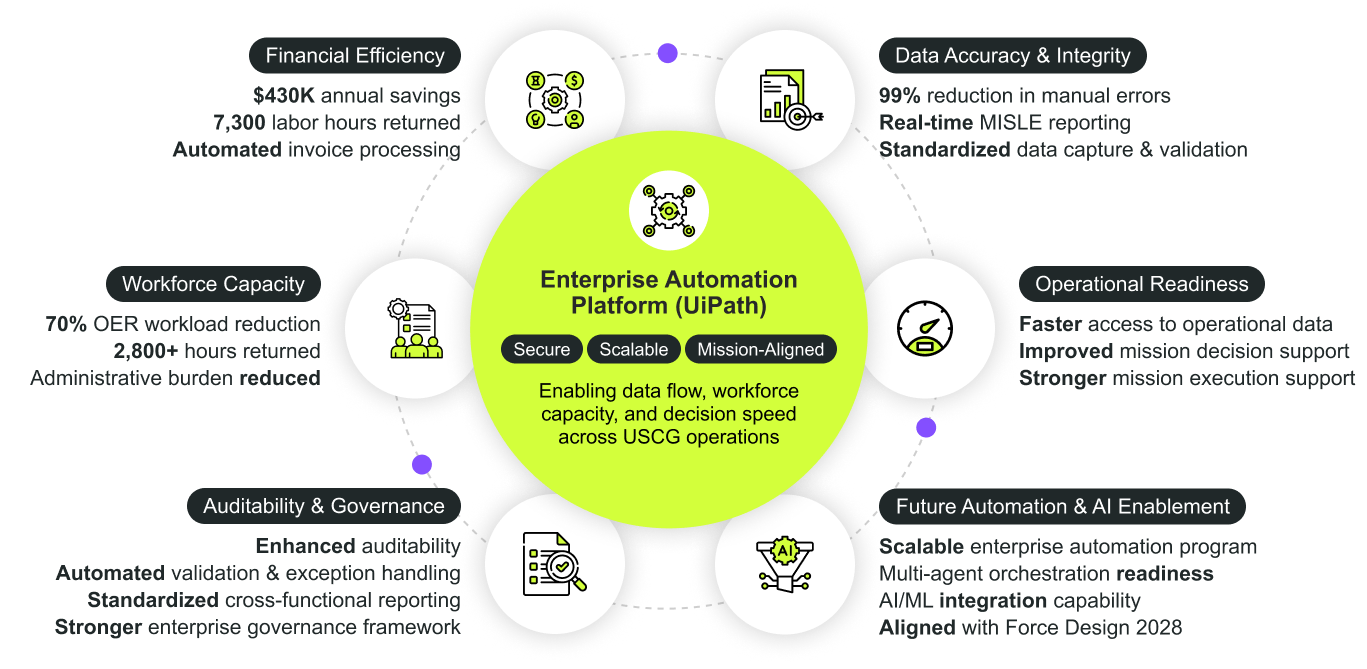
- $430,000 in annual savings and 7,300 labor hours returned through automated invoice processing at USCG Financial Service Center (FINCEN) using Document Understanding and attended automation.
- 99% reduction in manual errors and real-time MISLE reporting through digital Title 19 boarding reports captured via UiPath Apps and attended automation.
- 70% reduction in manual workload for OER processing, returning 2,800+ hours ($168,000 annually) to Coast Guard talent management operations.
- Improved operational readiness through faster, more accurate data availability for enforcement, personnel decisions, and financial oversight.
- Enhanced auditability with standardized data capture, automated validation, and systemized exception handling across finance, personnel, and operational reporting.
- A scalable automation program aligned with Force Design 2028, enabling expansion into vendor reconciliation, additional enforcement forms, and future agentic automations.
- Strengthened enterprise architecture and governance, positioning USCG to orchestrate multi-agent automation workflows and integrate future artificial intelligence and machine learning (AI/ML) capabilities.
Browse more case studies to see how our customers turn vision into reality.
NAVSEA Automation
Automation for mission-critical system integration testing
OTOT demonstrates massive acceleration and return-on-investment for systems that support mission-critical ship maintenance operations.
Military Health System
Using AI-augmented RPA to Accelerate Prescription Fulfillment
Military Health System (MHS) prescription processing depends on manual entry, delaying fulfillment and creating human errors that interfere with the military personnel tactical readiness.